Mardi Gras : a delicious French tour of Carnival Doughnuts
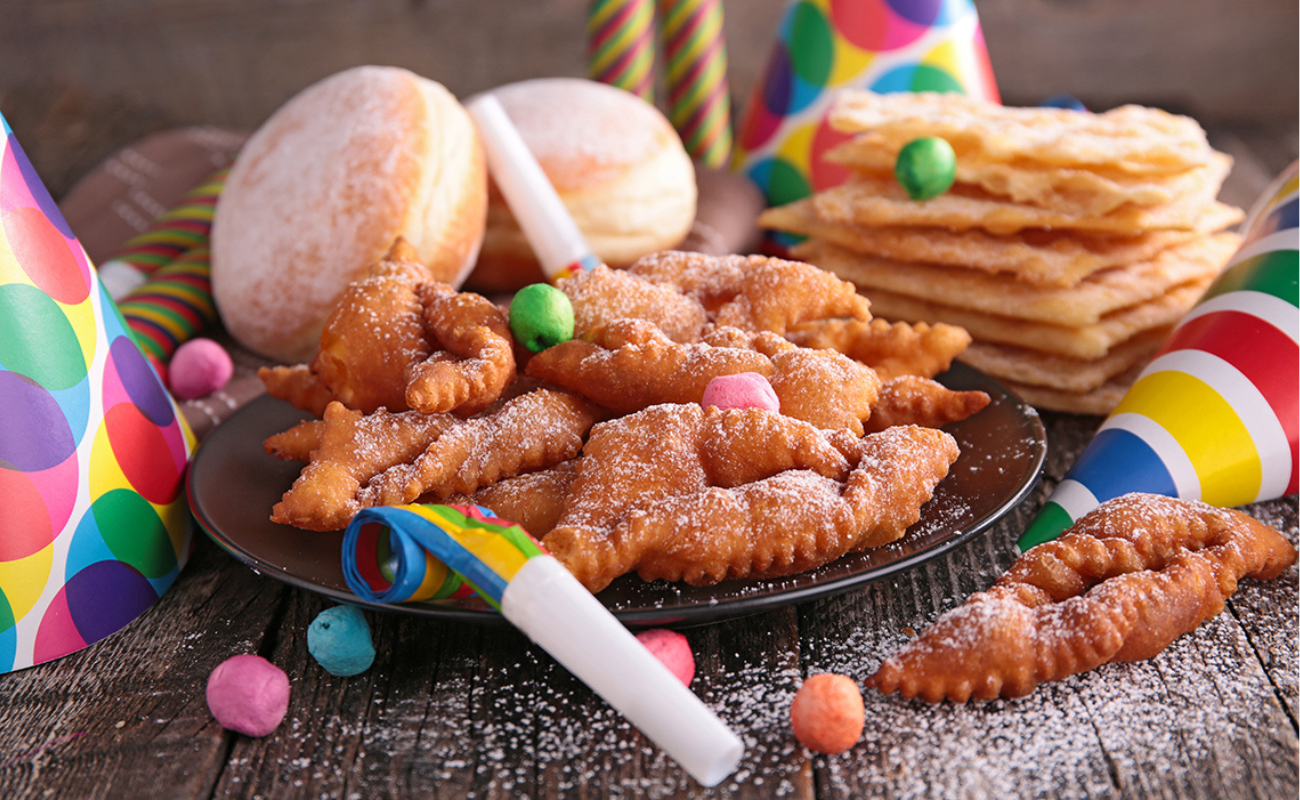
Bugnes, croustillons, pets de nonne, even the intriguingly named Crottes d’Âne – across France, Mardi Gras inspires a joyful parade of regional doughnuts with colorful names and centuries-old traditions. Their shared foundations are simple – deep-frying and a generous dusting of sugar – yet each region transforms these festive treats into something uniquely its own. Here is a refined and richly detailed tour of France’s most iconic Carnival doughnuts.
The Croustillons of Northern France
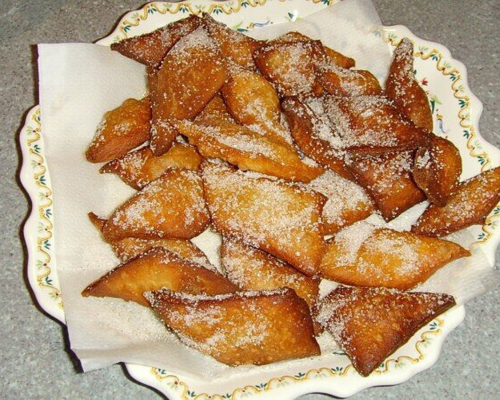
In northern regions such as Hauts-de-France and Nord-Pas-de-Calais, waffles may dominate local tradition, but Croustillons take center stage during Carnival. These small, irregularly shaped fritters are made from a light batter – flour, eggs, milk, yeast, and sometimes a splash of local beer, which adds both flavor and airiness.
Dropped by spoonfuls into hot oil, they puff and brown quickly, developing a crisp exterior while remaining tender inside. Served piping hot in paper cones – just like at funfairs and Christmas markets – they are showered with icing sugar. Some variations include raisins or apple pieces folded into the batter. The result is rustic, comforting, and irresistibly snackable.
Roussettes and Corvechets of Alsace-Lorraine
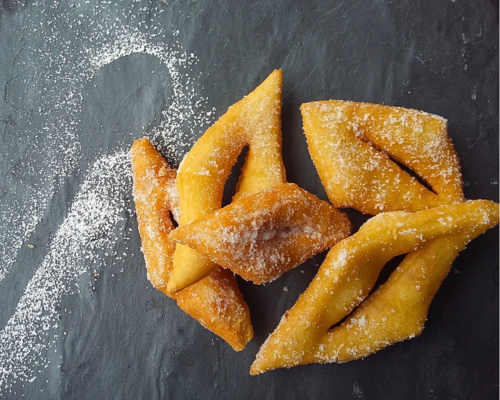
In Alsace, Carnival means Roussettes – diamond or ring-shaped doughnuts often scented with kirsch, the region’s famed cherry brandy. The dough, enriched with butter and eggs, is rolled thin, cut with a pastry wheel, and sometimes twisted before frying. Their delicate crispness contrasts beautifully with their fragrant interior.
Across the border in Lorraine, corvechets are richer and more indulgent. Generous amounts of cream and eggs create a supple dough that yields a soft, cake-like crumb. Lightly sweet and golden from frying, they are traditionally served plain or with a light dusting of sugar, allowing their buttery flavor to shine.
Pets de Nonne of Franche-Comté
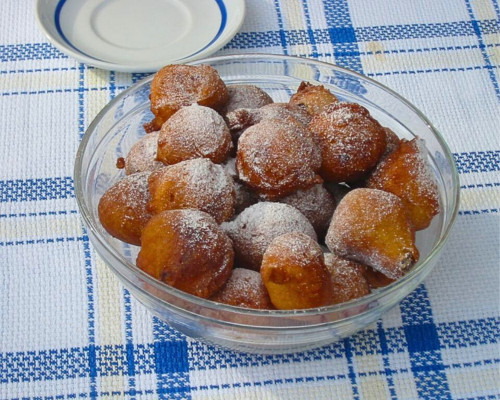
In Franche-Comté, the humorously named Pets de Nonne – literally “nun’s puffs” – offer a more refined take on the Carnival fritter. Made from choux pastry (the same dough used for éclairs and profiteroles), spoonfuls are dropped directly into hot oil.
They swell dramatically, forming airy, golden spheres with crisp shells and hollow centers. Traditionally rolled in sugar or cinnamon, they may also be filled with jam or pastry cream. According to local lore, the name stems from a tale of reconciliation: a nun is said to have shared her recipe with a neighboring convent to ease long-standing tensions – turning a sweet gesture into culinary legend.
Bottereaux, Tourtisseaux, and Foutimassons of Western France
Western France offers a trio of names for remarkably similar delights. Around Nantes, they are called Bottereaux. In Poitou-Charentes, Tourtisseaux. And in Vendée, Foutimassons.
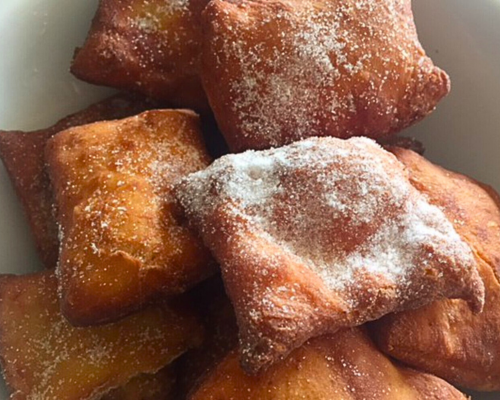
These geometric fritters – often cut into rectangles or diamonds – are made from a yeast-based dough enriched with butter and eggs. A touch of dark rum, vanilla, or orange blossom water is frequently added, reflecting maritime trade influences in Atlantic ports. Fried until golden and slightly blistered, they balance crisp edges with a soft, bread-like center. Families traditionally prepare them in large batches, storing them for several days – if they last that long.
The Bugnes of Lyon
In Lyon, the undisputed queen of Mardi Gras is the Bugne. The word derives from the Franco-Provençal bunyi, meaning “bump” or “swelling”.
There are two principal styles: bugnes lyonnaises moelleuses, thick and pillow-soft thanks to yeast, and bugnes croustillantes, thinner and crisp, closer to Italian chiacchiere. The dough typically includes flour, eggs, butter, sugar, and sometimes orange blossom water, lemon zest, or even honey. After being cut into rectangles and slit in the center (with one end threaded through to create a twist), they are fried to a delicate golden hue and generously dusted with icing sugar. In Lyon’s bakeries, they appear weeks before Lent, marking the season’s arrival.
Merveilles of the Southwest
In the Southwest – particularly around Bordeaux and Toulouse –Merveilles (“wonders”) live up to their name. The dough is rolled exceptionally thin, then cut into circles, diamonds, or strips with fluted pastry wheels. A slit in the center ensures even frying and decorative flair.
Often flavored with rum, orange blossom water, or citrus zest, they puff slightly in the oil, creating bubbly, delicate textures. Some families drizzle them with honey instead of sugar, a nod to regional beekeeping traditions. Their lightness makes them dangerously easy to eat by the handful.
Oreillettes of Languedoc, Provence, and Corsica
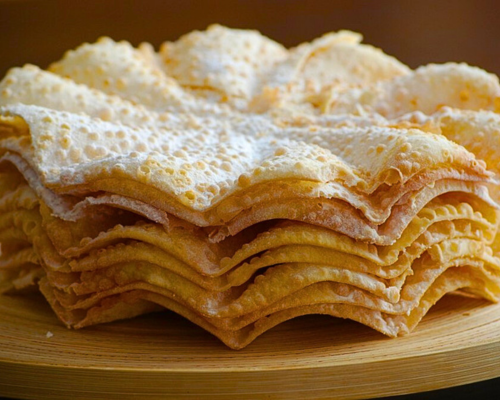
In Languedoc and Provence, the Carnival season belongs to Oreillettes, named for their ear-like shape. The dough – typically flour, eggs, sugar, olive oil or butter, and orange blossom water – is stretched almost paper-thin before frying.
They blister and ripple in hot oil, producing an ethereally crisp texture that shatters delicately under the bite. A snowfall of icing sugar completes the experience.
On the island of Corse, they are sometimes called Frappes and may be scented with myrtle liqueur, adding a distinct Mediterranean fragrance.
Ganses of Nice
In Nice, Carnival celebrations are inseparable from Ganses (or Gansettes). Their defining feature is a neatly knotted shape, achieved by threading one end of the dough strip through a central slit.
Traditionally fried in olive oil – reflecting the culinary identity of the French Riviera – they are crisp yet tender, subtly perfumed with orange blossom water. During the famed Nice Carnival, bakeries and market stalls overflow with these golden twists.
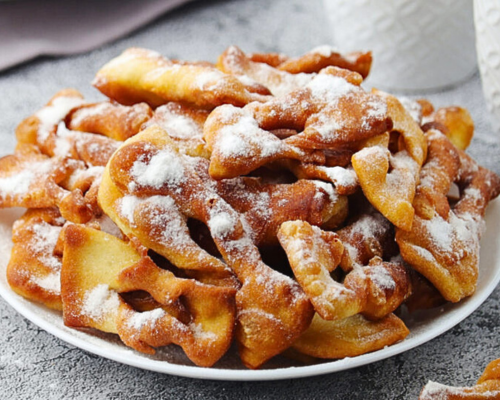
A Nation of Sweet Indulgence
Beyond these well-known varieties lie countless local names—crouchepettes, guenilles, and even the humorously titled crottes d’âne. Across France, Mardi Gras is a final moment of indulgence before Lent begins, when rich ingredients like eggs, butter, and sugar were historically used up in celebratory abundance.
And doughnuts are only part of the story: crêpes and waffles also share the spotlight, ensuring that wherever you are in France, Carnival promises warmth, sweetness, and the comforting aroma of frying dough.
So pack your warmest clothes, bring your sense of adventure, and let France’s snowy mountains welcome you into a magical winter escape you’ll never forget.